

Site Information
About This Site
Dar Sayyidah Khadijah (R.A.) is traditionally associated with the home of Prophet Muhammad ﷺ and his beloved wife, Sayyidah Khadijah bint Khuwaylid (R.A.). Although the house no longer stands, its memory remains closely connected with the earliest days of...
Historical Significance
Dar Sayyidah Khadijah (R.A.) is traditionally associated with the home of Prophet Muhammad ﷺ and his beloved wife, Sayyidah Khadijah bint Khuwaylid (R.A.). Although the house no longer stands, its memory remains closely connected with the earliest days of Islam. It was more than a family home. It was a place where the Prophet ﷺ found companionship, comfort, peace, and loving support. After receiving the first revelation in the Cave of Hira, he returned home deeply shaken and asked to be covered. Khadijah (R.A.) welcomed him with calmness and compassion. She comforted him, trusted him, and reminded him of the goodness she had always seen in his character. She then took him to Waraqah ibn Nawfal, who recognized the importance of the experience. At a time when the message was still unknown to the people of Makkah, Khadijah (R.A.) believed in the Prophet ﷺHer faith came before public recognition or worldly support. For many pilgrims, remembering this home brings the earliest days of Islam closer to the heart. It reflects how faith, love, trust, and courage can begin within a family and support a mission that reaches generations. Historical Significance Dar Sayyidah Khadijah (R.A.) is traditionally connected with the Prophet’s ﷺ home during the earliest period of his mission. It links his family life with the beginning of the public message of Islam. The home is remembered for:
- The Prophet’s ﷺ return after the first revelation.
- Khadijah’s position as the first person to believe in his message.
- The comfort and reassurance she offered him.
- Its connection with the Prophet’s ﷺ family life in Makkah.
- The sacrifices made by the earliest Muslims.
Khadijah (R.A.) remained beside the Prophet ﷺ through rejection, pressure, and persecution. She offered emotional support and used her wealth to support the Prophet ﷺ and those who suffered for their faith. Her life shows that standing beside the truth may require patience, courage, and sacrifice. Sayyidah Khadijah al-Kubra Sayyidah Khadijah bint Khuwaylid (R.A.) was a respected woman of Makkah. Traditional biographies describe her as dignified, honest, intelligent, and noble. She was also associated with the title “al-Tahirah,” meaning “the Pure One.” Before Prophethood, Muhammad ﷺ was known as al-Amin, meaning “the Trustworthy.” Their marriage was built on respect, affection, trust, and excellent character. Khadijah (R.A.) was:
- The first person to believe in his message.
- The first to comfort him after the beginning of revelation.
- A devoted mother and member of his household.
- A generous supporter of the early Muslim community.
- A courageous woman whose faith helped shape early Islamic history.
She believed before Islam became widely accepted. She trusted the Prophet’s ﷺ character and stood beside him when the future was uncertain. The House as a Place of Support The home associated with Khadijah (R.A.) represents the strength of family support. While the Prophet ﷺ faced hostility outside, he found compassion, understanding, and reassurance at home. Khadijah (R.A.) supported him through:
- Comfort during difficulty.
- Trust in his character and Prophetic mission.
- Financial support for the early Muslim community.
- Patience during persecution.
- Loyalty when others rejected him.
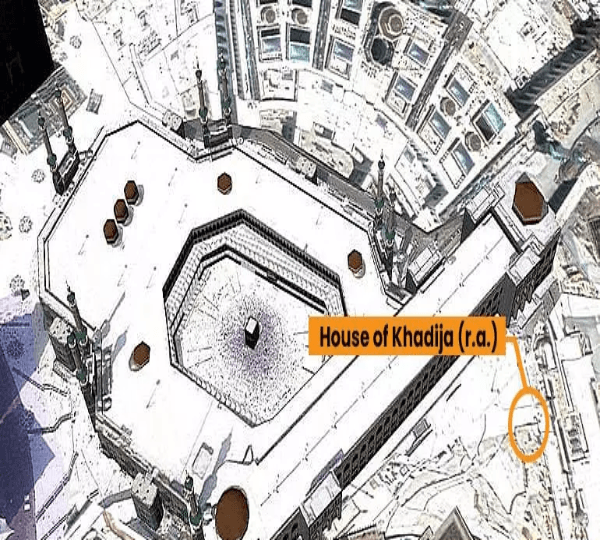
Her story shows that support may come through a reassuring word, a patient presence, a sacrifice, or the decision to remain beside someone during hardship. Family Life in the Home The site is also connected with the family life of the Prophet ﷺSeveral of his children were born during his marriage to Khadijah (R.A.), including his beloved daughter Fatimah (R.A.). This gives the location a deeply human meaning. Visitors remember not only the beginning of revelation, but also a home where the Prophet ﷺ experienced marriage, fatherhood, companionship, responsibility, and personal sorrow. It reminds us that he carried his great mission while also living the everyday experiences of family life. What Happened to the House? The original house no longer survives as a separate building. Historical accounts traditionally associate it with Banu Hashim, near the present-day Marwah side of Masjid al-Haram.Over time, Makkah underwent extensive development. The expansion of Masjid al-Haram, road changes, construction, and new pilgrim facilities transformed the area. Many historic locations were absorbed into the modern Haram complex. Visitors should not expect to see the original walls, rooms, or doorway. The location is best understood as a traditional historical identification, not a preserved monument. Visiting the Site Today There is no special ritual established specifically for Dar Sayyidah Khadijah (R.A.). Visitors should approach the location with respect, maintain the dignity of Masjid al-Haram, and avoid making claims about details that cannot be confirmed. Since the original house no longer remains, the visit is experienced through knowledge, remembrance, and quiet reflection rather than through visible ruins. For a visitor, the most meaningful way to remember this place is to think about the comfort the Prophet ﷺ found within his home after the first revelation. After returning from the Cave of Hira deeply shaken, he was welcomed by Khadijah (R.A.) with calmness, trust, and love. She did not turn away from him or question his experience. Instead, she stood beside him with complete faith when the future was still unknown. A visitor may reflect: Here, the Prophet ﷺ found comfort after the first revelation, and here, Khadijah (R.A.) stood beside him with unwavering faith. Even without visible walls, rooms, or doorways, the memory of this home can touch the heart. It reminds visitors that the earliest support for Islam came through a loving family and through the courage of a woman who believed before others understood. Remembering Dar Sayyidah Khadijah (R.A.) can inspire gratitude for her devotion, patience, sacrifice, and lasting place in Islamic history. Why This Ziyarat Matters Dar Sayyidah Khadijah (R.A.) teaches that:
- Faith may require courage before recognition.
- True support is most valuable during hardship.
- Sacrifice may include wealth, comfort, time, and security.
- Family life was an important part of the Prophet’s ﷺ experience.
A Legacy That Remains The house may no longer stand, but Khadijah’s (R.A.) legacy remains alive in Muslim hearts. Her faith, generosity, courage, and loyalty continue to inspire generations. For visitors exploring Makkah, Dar Sayyidah Khadijah is a reminder that the earliest support for Islam began within a home where the Prophet ﷺ was comforted and faith was welcomed. Though the house has disappeared, the example of Khadijah (R.A.) remains a source of honour, love, and gratitude. Frequently Asked Questions 1. Where is Dar Sayyidah Khadijah located? It is traditionally identified near Marwah in Masjid al-Haram, Makkah. Its exact original position is uncertain. 2. Can visitors see the original house? No. The original house no longer exists as a separate building, so visitors cannot enter or see its rooms and walls. 3. Why is Dar Sayyidah Khadijah historically important? It is traditionally associated with the home where Khadijah (R.A.) comforted and supported Prophet Muhammad ﷺ after the first revelation.